On Monday 16 November, visitors to some of the best-known websites in the world, the BBC among them, were served hidden code that tried to break into iPhones and iPads. The devices it went after had one thing in common: they were running out-of-date software. For a business, that turns a news story about websites into a question about the old phones and tablets still in use, or sitting in a drawer.
This piece sets out what happened, which devices were in the firing line, what Apple has already fixed, and what to do about the iPhones and iPads your business owns.
What happened
The attack came through Optimizely, a company whose tools many large websites use to test changes to their pages. In its incident notice, Optimizely says an outsider exploited a flaw in its sign-up process and used it to insert malicious code into some customers' projects. It says it closed the flaw "within three hours of detection", that fewer than 5% of its customers were affected, and that it has contacted every customer of the affected product.
The scale was measured by Report URI, the security firm that uncovered the attack. It found the code on the sites of 178 organisations. Its list includes the BBC, O2, Virgin Media, TalkTalk and ASOS, alongside Zoom, CNN, IKEA and several HSBC sites outside the UK. Because the code arrived from a supplier those sites trusted, the sites themselves did not need to be broken into.
According to Report URI, the code did four things: it swapped cryptocurrency payment addresses, tried to copy card details typed into a site's own payment form, took cookies and screenshots, and on iPhones and iPads it loaded attack tools known as Coruna and DarkSword.
Why old software was the target
Report URI says the code read the software version of each iPhone or iPad and chose its attack to match: Coruna for iOS 13 to 17, DarkSword for iOS 18. On the newest system, iOS 26, it only collected details about the device. The attack tool's own notes, the firm says, mark iOS 18.7.3 and later, and iOS 26.3 and later, as fixed.
These are not attacks that need a mistake from the user. As The Record puts it, with DarkSword "simply visiting a compromised website through a web browser can trigger an attack".
What we do not know
Nobody has shown that a single phone was actually taken over on Monday. Report URI says it has "no way to see" how many iOS devices were infected. Hudson Rock, a firm that examined the campaign separately, says it has not demonstrated the compromise of a real victim's iPhone, Help Net Security reports. What is established is that the attack was attempted, on a very large audience, in a single day.
The good news: most old iPhones can be fixed
An old iPhone is not automatically a defenceless one. Apple has released fixes that cover handsets as far back as the iPhone 6s, and its own update notes show which:
- iPhone XS, XS Max and XR, and newer: iOS 18.7.3 was released on 12 December 2025. Report URI's advice is to be on iOS 18.7.3 or later, or iOS 26.3 or later.
- iPhone 8, 8 Plus and X: iOS 16.7.15, released on 11 March 2026, carries a fix Apple describes as "associated with the Coruna exploit".
- iPhone 6s, 7 and the first iPhone SE: iOS 15.8.7, released the same day, carries four such fixes.
The same updates cover the matching iPads, including the iPad Air 2, the 5th generation iPad and the 7th generation iPad. Apple says the March updates bring each fix "to devices that cannot update to the latest iOS version".
So the phones at risk on Monday were not simply the old ones. They were the ones nobody had updated.
Where that leaves a business
In our experience, the iPhone in an employee's pocket is rarely the problem, because it nags its owner until it is updated. The forgotten devices are the ones that fall behind:
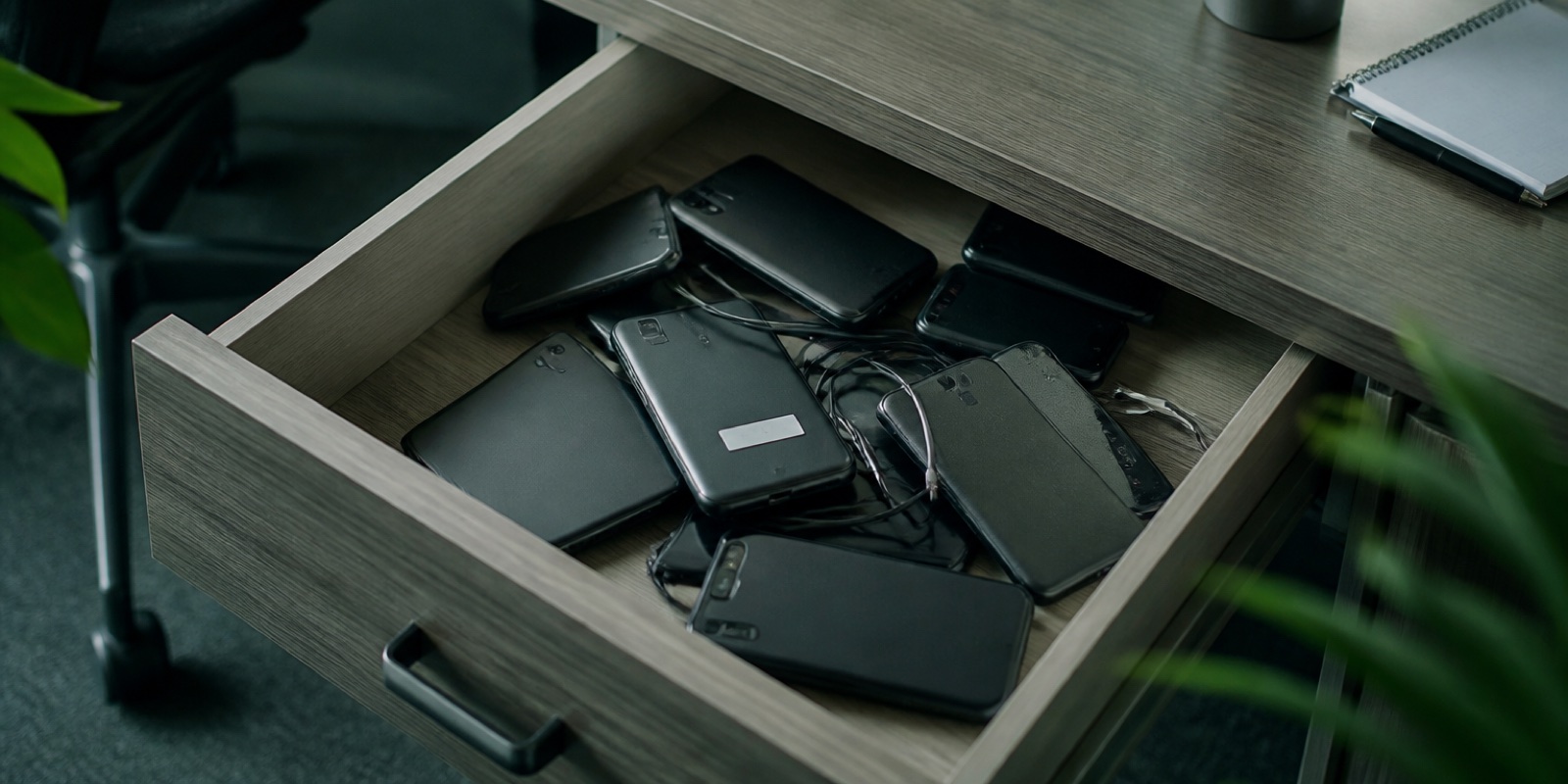
- the iPad on the reception desk, the shop counter or the meeting room wall
- the spare handset kept for new starters
- the phone a leaver handed back, still signed in
- the old model passed down to a junior colleague or taken home for the children
There is also a limit to how long updating works. Apple's list of security releases shows the iOS 15 and iOS 16 lines last received an update on 11 May 2026, while iOS 18 and iOS 26 were both updated on 9 November. In our reading, that means the oldest handsets get fixes occasionally, not routinely, and the gap will only widen.
Five things to do this week
- List every iPhone and iPad the business owns. Include the shared, spare and forgotten ones.
- Check the software version on each. It is under Settings, then General, then About.
- Update everything that can be updated. Use the version numbers above as the minimum, and take the newest version each device offers.
- Decide which devices have reached the end. A phone that cannot reach a fixed version, or that nobody is going to keep updated, should not be used for email, banking or customer data.
- Retire them properly. Sign the device out of its Apple account, erase it, remove it from your device management system, and keep a record. Our earlier guide to business phone disposal covers the steps people miss.
If your own website uses Optimizely's testing product, that is a separate job for whoever runs the site. Optimizely says it has contacted every customer of that product to confirm whether they were affected, and Report URI's article lists the checks to make.
For disclosure, Nanosoft provides secure data destruction and IT asset disposal, including for phones and tablets, so weigh the above accordingly. Every fact here can be checked against the sources linked in the text, as they stood on 18 November 2026.
The honest summary
Monday's attack reached people through websites they had every reason to trust, and there was nothing a visitor could have done differently on the day. The only defence was one put in place beforehand: an updated device. Most old iPhones and iPads can still be updated, and should be this week. The ones that cannot, or that nobody will look after, should be wiped and retired before they are the weak point.
Nanosoft Team
Writer at Nanosoft - covering ITAD, data security, and sustainable technology lifecycle management.
Found this useful? Share it.