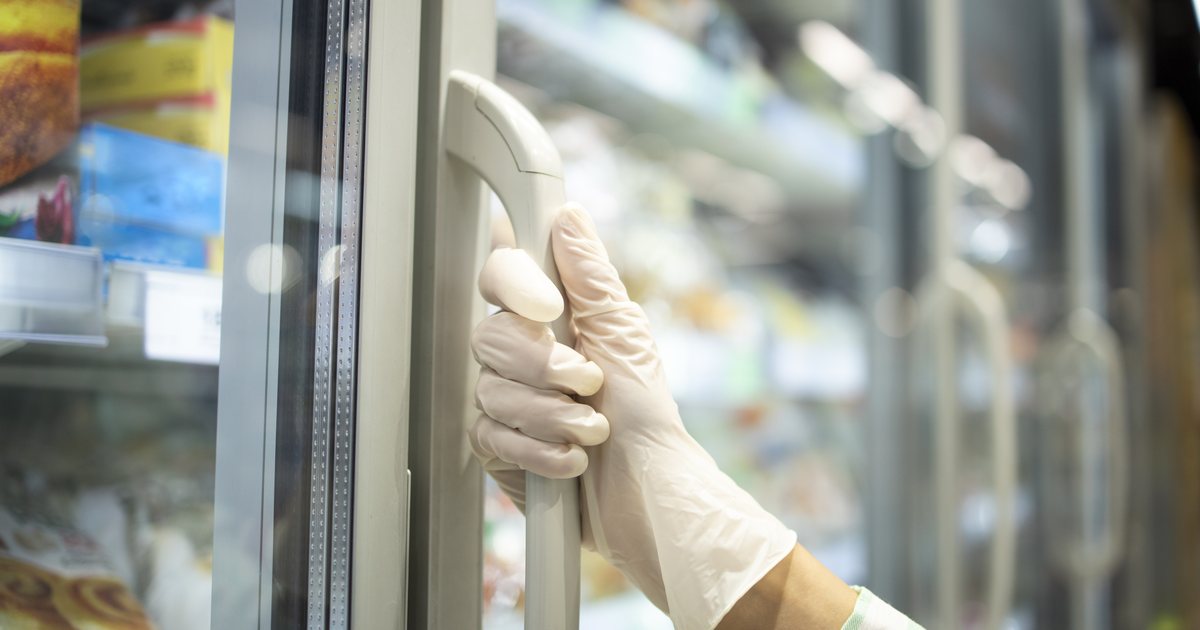
France has officially blamed Iran for the night in October when the fridges and freezers at around 700 French supermarkets were switched to defrost. On 9 November the French government named a cyber unit linked to Iran's Islamic Revolutionary Guard Corps, said it would summon Iran's ambassador and seek European sanctions. The verdict covers the attack in France. It does not cover the second wave in early November, the one that reached British suppliers.
This piece sets out what France has said, what it leaves open for the UK, and why it matters to a UK food business that has never thought of itself as a target.
What France has said
In a statement on 9 November, the French foreign ministry attributed the attack on the night of 11 to 12 October to a unit called Shahid Kaveh, which it said is affiliated with the electronic and cyber centre of the Revolutionary Guard. The ministry said the attacks caused considerable material damage, fires and food losses estimated at several tens of millions of euros. It called the campaign the first carried out purely for sabotage on French soil, and described the unit as a persistent threat to France's critical infrastructure.
The evidence is set out in a five-page report from France's cyber crisis coordination centre, which brings together the national cyber security agency ANSSI, the domestic and foreign intelligence services, the armed forces' cyber command and the defence procurement agency. It says the attackers changed defrost settings to high temperatures, causing major stock losses and, in at least 15 cases, fires. Most of the victims were large retail groups, but the report also lists several small butcher shops, an abattoir and cooperative food factories.
The report gives four strands of evidence: infrastructure that was also used to probe other industrial equipment, a scanning tool the group habitually uses, publicity for the attack on a propaganda channel linked to the unit from 13 October, and traces of Farsi in the attack infrastructure. The Paris prosecutor has opened a judicial investigation into the unit's leaders and is seeking international arrest warrants, the Associated Press reports.
According to Recorded Future News, US agencies have previously identified Shahid Kaveh as another name for CyberAv3ngers, a group linked to attacks on industrial controls at US water utilities. Iran routinely denies conducting cyber attacks and had not responded publicly by Monday evening.
What it does not settle
This is a government attribution, not a court ruling, and not everyone accepts it. Peter Bassill, founder of UK Cyber Defence, told The Grocer there is "no evidence factual or anecdotal" pointing to Iran. Before France spoke, two pro-Russian groups had claimed the attacks on Telegram, as RTÉ reported.
More importantly for UK readers, the French report deals only with the October attack in France. Recorded Future News notes that it does not address the second wave in early November, which hit businesses in at least 11 European countries, including British meat suppliers and three sites of France's national blood service. We found no UK government statement attributing the British cases to anyone as of 10 November.
Why it matters if you run a food business
In our reading, three things follow, none of which depend on who was behind it.
You do not have to be chosen to be hit. The French victims included small butchers and an abattoir, not only household names. The report says the attackers used FOFA, a search tool that lists equipment reachable from the internet. In our reading, a shop is found that way, not selected. The head of ANSSI, Vincent Strubel, told the French Senate last month that previously published vulnerabilities were not exploited, The Grocer reports. He described the causes as "basic security flaws", starting with equipment exposed directly to the internet.
Sabotage has no ransom note. None of the reports we have read mention a ransom demand. France describes the aim as sabotage. In our reading, that means the only defence that counts is the one in place before the night it happens, and an alarm that reaches someone when settings change.
Your insurance may treat it differently. Since 31 March 2023, Lloyd's has required standalone cyber policies written in its market to exclude losses from state-backed cyber attacks that significantly impair a state's ability to function or its security, and to set out how the parties will agree whether an attack came from a state. Whether a sabotaged fridge in a UK shop would ever meet that bar is a question for your policy wording, not for us. Insurance Business reports that the attacks are already sharpening questions among brokers about how cyber attacks that damage stock and equipment are covered. It is worth asking yours.
What has not changed
The practical steps are the same as they were last week. Find out whether anyone outside your business can reach your fridge controls, who holds the logins, and whether anyone has checked since October. Our article on what UK food businesses should check sets out five questions to put to your refrigeration contractor. Add a sixth for your broker: does our policy cover stock lost to a cyber attack, and does it change if a government blames another state?
For disclosure, Nanosoft is an IT disposal company and has launched a refrigeration controller security service in response to these attacks, so weigh the above accordingly. Every fact here can be checked against the sources linked in the text, as they stood on 10 November 2026.
The honest summary
France says a unit of Iran's Revolutionary Guard sabotaged its supermarket fridges in October, and it has named the people it holds responsible. The British cases came in a later wave that nobody has officially attributed. For a UK food business the lesson is the same either way: the way in was described as basic, small shops were caught up, and the time to close it is before anyone tries.
Nanosoft Team
Writer at Nanosoft - covering ITAD, data security, and sustainable technology lifecycle management.
Found this useful? Share it.