In an increasingly digital and regulated world, supply chain security has become a priority for organisations of all sizes. While much of the focus is placed on procurement and logistics, one critical stage is often overlooked: IT asset disposal (ITAD).
Without proper controls, the end-of-life phase of IT equipment can introduce significant risks. From data breaches to environmental non-compliance, a poorly managed supply chain can have serious consequences.
At Nanosoft, we see ITAD as a key part of a secure and responsible supply chain strategy, not an afterthought.
The Risks of a Poorly Managed Supply Chain
Modern supply chains are complex, often involving multiple vendors and processes. If not properly managed, this complexity can create vulnerabilities, particularly when disposing of IT equipment.
Common risks include:
- Data security breaches due to incomplete or improper data erasure
- Non-compliance with regulations such as GDPR and WEEE
- Environmental impact from incorrect recycling or disposal practices
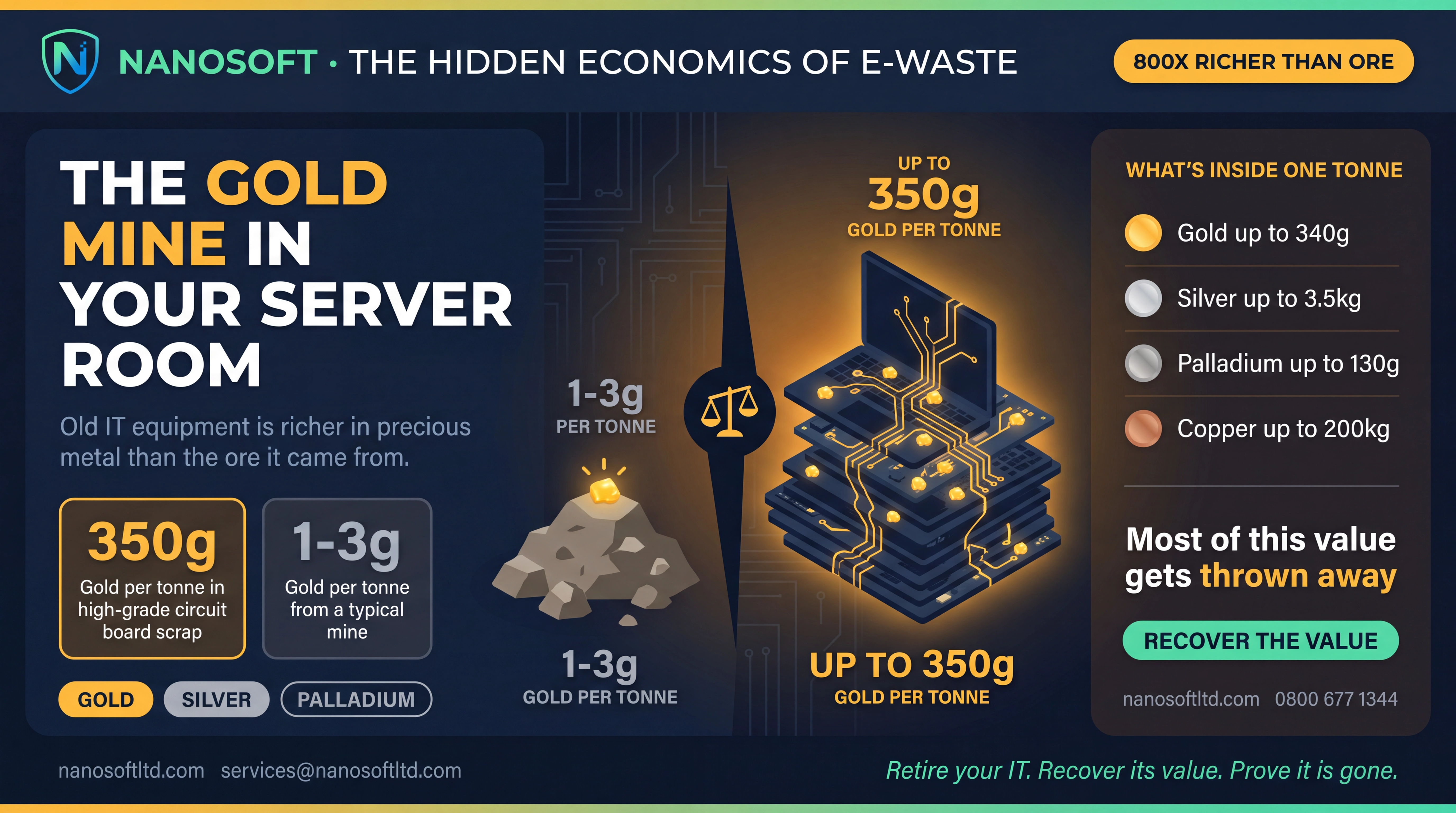
- Loss of asset value through inefficient recovery processes
- Lack of visibility across downstream vendors
For organisations handling sensitive data, these risks are not theoretical; they are very real and increasingly scrutinised.
Due Diligence in ITAD: Getting It Right
Effective due diligence is essential when selecting and managing ITAD providers. It goes beyond initial onboarding and should form part of an ongoing risk management process.
Key considerations include:
Certified Processes
Work with providers who operate to recognised standards such as:
- ISO 27001 (Information Security)
- ISO 14001 (Environmental Management)
These certifications demonstrate a structured approach to security and sustainability.
Secure Chain of Custody
Every IT asset should be tracked from collection through to final disposition.
A clear chain of custody ensures:
- Full accountability
- Reduced risk of loss or theft
- Confidence in the disposal process
Data Erasure Standards
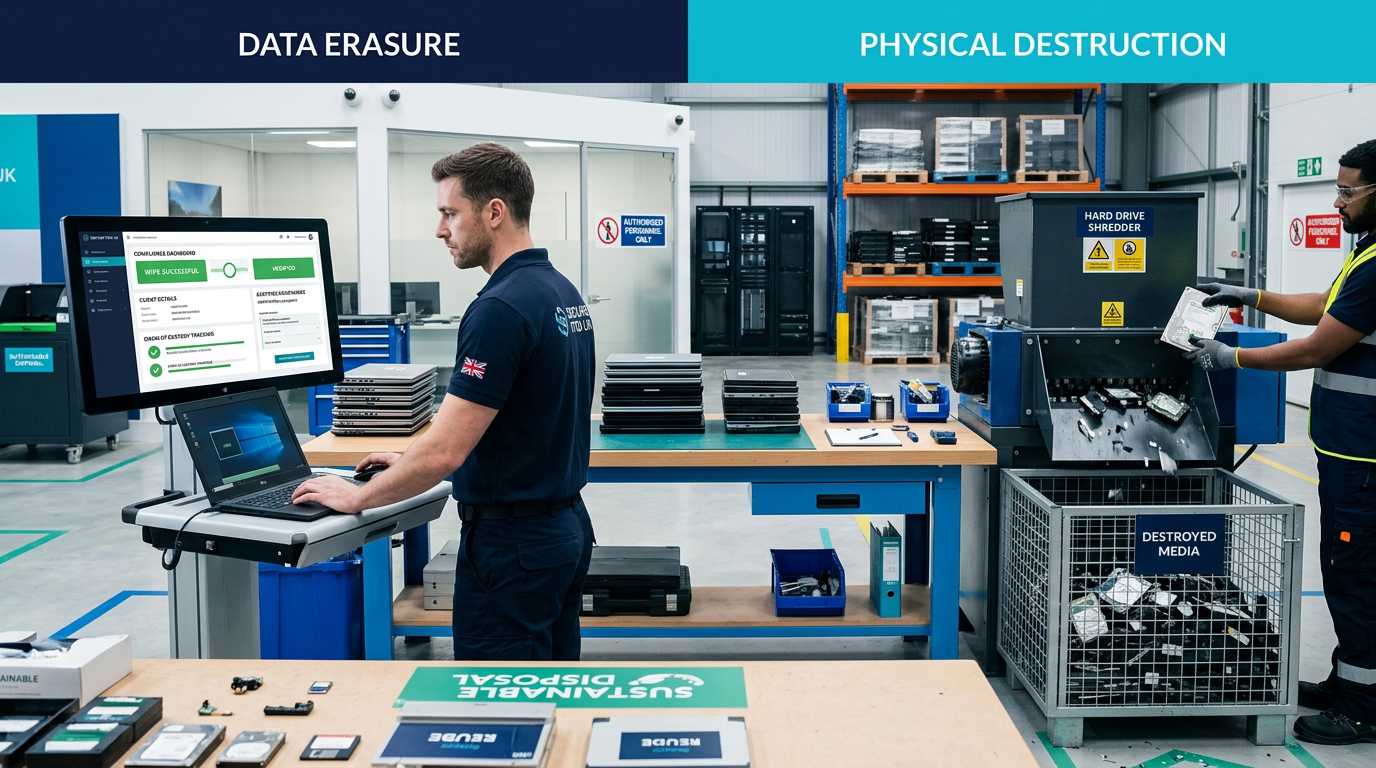
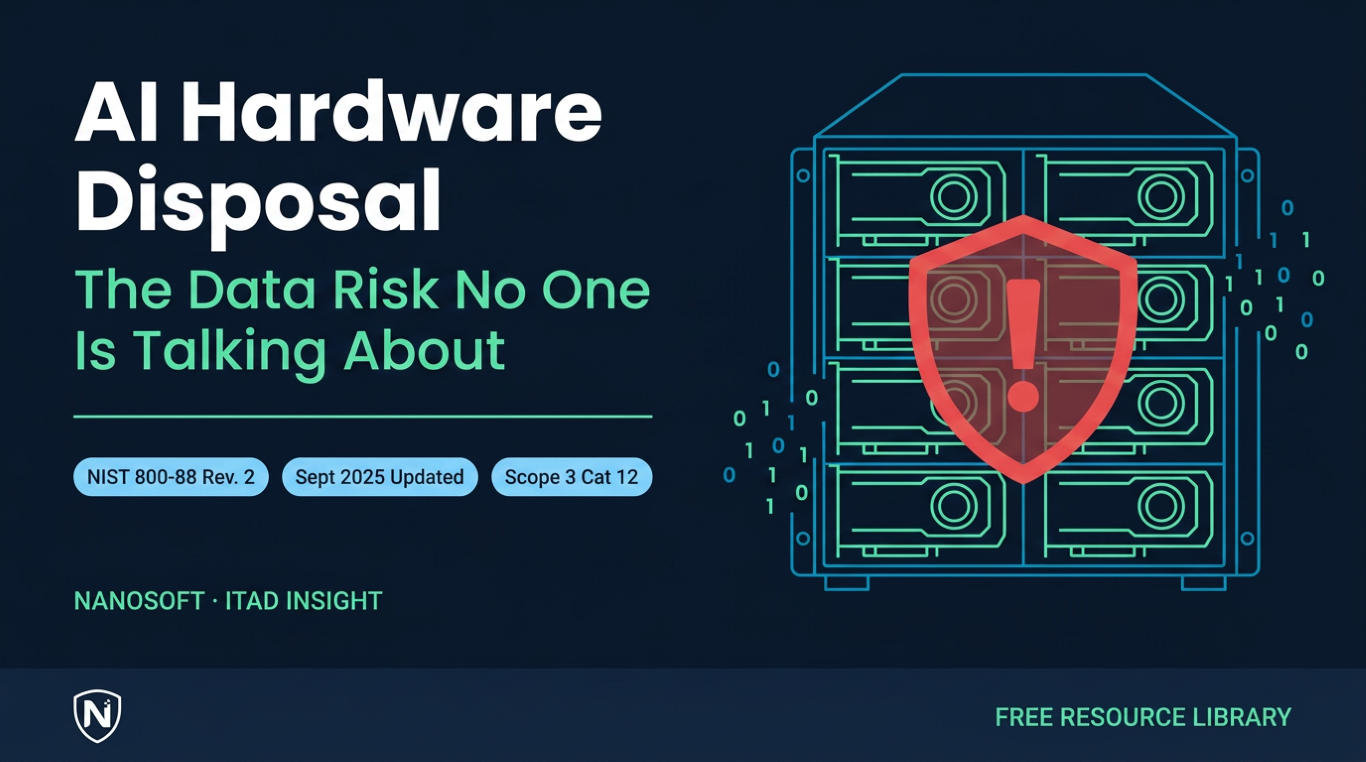
All devices should be sanitised using recognised methods, such as NIST 800-88.
This is critical to ensuring:
- Data is permanently removed
- Devices can be safely reused or recycled
- Compliance requirements are met
Downstream Transparency
Organisations must understand where their IT assets go after collection.
Without transparency, there is a risk of:
- Unauthorised export of e-waste
- Non-compliant recycling practices
- Reputational damage
Audit and Reporting
Comprehensive reporting provides evidence that processes have been followed correctly.
Look for:
- Asset-level reporting
- Data erasure certification
- Environmental reporting
ITAD as a Critical Part of Supply Chain Security
IT asset disposal is not separate from the supply chain; it is an integral part of it.
At the end of the lifecycle, organisations must ensure that:
- Sensitive data is securely destroyed
- Equipment is processed responsibly
- Environmental obligations are met
- Residual value is recovered where possible
A weakness at this stage can undermine all previous security controls.
The Impact of Poor ITAD Practices
Failing to manage ITAD correctly can lead to:
- Financial penalties linked to data breaches or regulatory failures
- Reputational damage affecting customer and stakeholder trust
- Operational disruption from compliance issues
- Missed revenue opportunities from recoverable assets
In short, poor ITAD introduces avoidable risk into the supply chain.
The Nanosoft Approach
Nanosoft delivers secure and sustainable IT asset disposal services designed to support modern supply chain requirements.
Our approach focuses on:
- Secure data destruction using certified erasure and destruction processes
- End-to-end asset tracking for full chain of custody
- Sustainable IT recycling aligned with environmental best practice
- Clear, auditable reporting to support compliance and governance
We help organisations manage IT assets responsibly, from deployment through to disposal.
Conclusion
Supply chain security does not end when equipment is deployed. It extends to how those assets are managed at end-of-life.
By embedding ITAD into supply chain strategy and carrying out proper due diligence, organisations can:
- Reduce risk
- Strengthen compliance
- Improve sustainability outcomes
- Protect their reputation
A secure supply chain is one that is managed from start to finish, including disposal.
Nanosoft Team
Writer at Nanosoft - covering ITAD, data security, and sustainable technology lifecycle management.
Found this useful? Share it.